
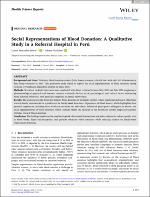
Social Representations of Blood Donation: A Qualitative Study in a Referral Hospital in Peru
Related Resource(s)
https://onlinelibrary.wiley.com/doi/10.1002/hsr2.71811Date
2026-02-19Metadata
Show full item recordAlternate title
Representaciones sociales de la donación de sangre: un estudio cualitativo en un hospital de referencia del Perú
Abstract
Background and Aims: Voluntary blood donation rates in Latin America remain critically low, with only 24% of donations in
Peru being voluntary in 2023. This qualitative study aimed to explore the social representations of blood donation among
relatives of transfusion‐dependent patients in Lima, Peru.
Methods: Seventeen in‐depth interviews were conducted with direct relatives between May 2021 and July 2021, employing a
phenomenological approach and thematic analysis to identify the key social, psychological, and cultural factors influencing
blood donation behaviors, with particular emphasis on family motivations.
Results: The analysis revealed three key themes: blood donation in the family context, where emotional and moral obligations
towards family members led to a preference for family‐based donations; Experiences of blood donors, which highlighted how
personal experiences, including fears of adverse reactions and side effects, influenced participants' willingness to donate; and
social representations of blood donation, where cultural beliefs and mistrust of the healthcare system shaped participants'
attitudes towards blood donation.
Conclusion: The findings emphasize the need for targeted educational interventions and policy reforms to enhance public trust
in blood banks, dispel misconceptions, and promote voluntary blood donation, while reducing reliance on family‐based
replacement donations.
Collections
- Artículos científicos [925]

Except where otherwise noted, this item's license is described as info:eu-repo/semantics/openAccess